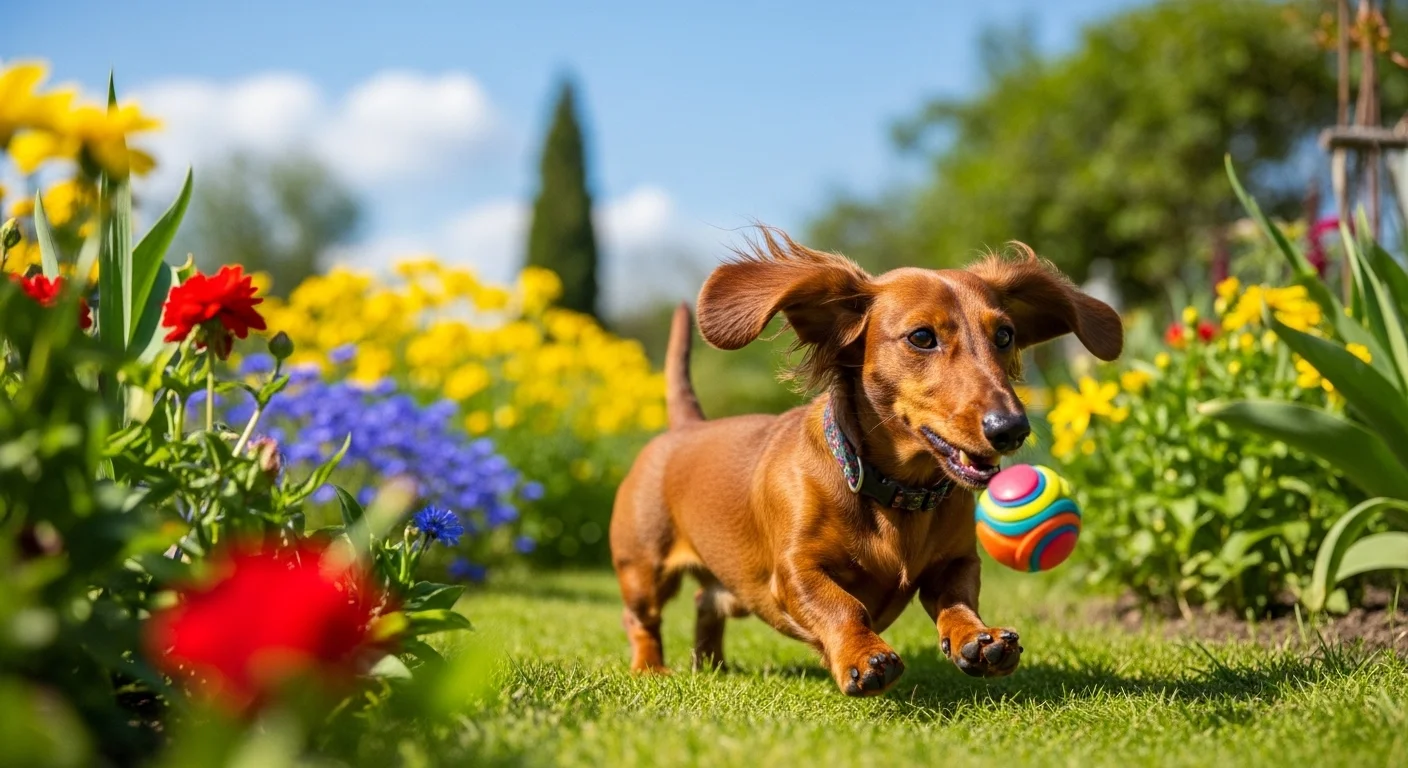

If you are searching for how to potty train a dachshund, you are already taking the first step toward raising a well-behaved and clean pet. Many new dog owners struggle with dachshund potty training because this breed is known for its stubborn nature and small bladder size. These two factors make potty training a dachshund puppy a bit more challenging than other dog breeds.
Potty training is not just about keeping your home clean. It helps your puppy build a routine, improves discipline, and strengthens the bond between you and your dog. A properly trained dachshund feels more secure because it understands where and when to go.
One common question people ask is, why are dachshunds hard to potty train? The answer lies in their personality. Dachshunds are intelligent but independent. They often like to follow their own rules, which can slow down dachshund toilet training. In this complete guide, you will learn simple and effective ways to handle how to potty train a dachshund puppy step by step using easy methods that actually work.
2. Understanding Dachshund Behavior
Before starting training a dachshund puppy, it is important to understand how they think and behave. Many owners wonder, are dachshunds hard to potty train? The truth is, they are not impossible to train, but they do require more patience compared to other breeds.
Dachshunds were originally bred as hunting dogs. Because of this, they developed a strong sense of independence. This independent nature is one of the main reasons behind why are dachshunds so hard to potty train. They may understand what you want, but they might choose not to follow it immediately.
Another reason is their size. A mini dachshund puppy or even an 8 week old dachshund puppy has a very small bladder, which means they need to go to the bathroom more frequently. This is why accidents are common in the early stages of dachshund house training.
To succeed in training dachshunds, you must stay consistent and calm. Repeating the same routine daily helps your puppy learn faster and builds trust.
3. When to Start Potty Training
The best time to start potty training a dachshund puppy is between 8 to 12 weeks. Whether you have a mini dachshund puppy or a 12 week old dachshund puppy, early training gives better results.
Signs your puppy is ready:
Even if you start with a 6 week old dachshund puppy, you can introduce basic habits, but full training will take more time. If your dog is older, like a 5 month old dachshund, training is still possible, but it may require more effort to change existing habits.
It is important to watch for signs that your puppy is ready. Puppies often show signals before they go, such as:
- Sniffing the floor
- Going to corners
- Restlessness
Recognizing these signs early helps a lot in toilet training a dachshund puppy.
You should also keep realistic expectations. A young puppy cannot hold its bladder for long hours. So patience is necessary during potty training dachshund puppy stages.
4. Essential Supplies for Potty Training
Having the right supplies can make how to train a dachshund puppy much easier. You do not need anything expensive, but a few important items can save you time and effort.
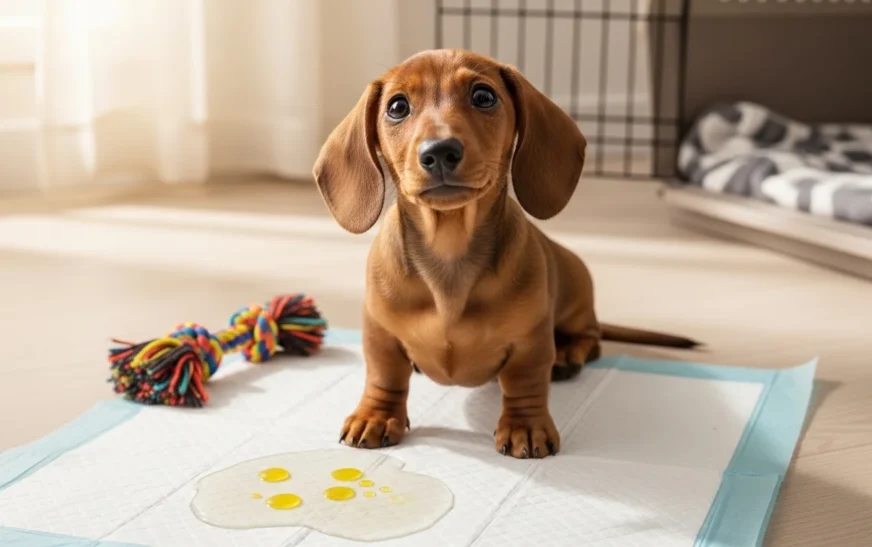
- Puppy pads (useful for indoor training)
- Crate or playpen (helps in crate training a dachshund puppy)
- Enzyme cleaners (remove smell completely)
- Treats (use best potty training treats for puppies)
- Leash and collar
Puppy pads are helpful, especially if you are starting indoor dachshund potty training. A crate or playpen is also very useful for managing your puppy’s movement and is important for crate training a dachshund puppy. You should also keep enzyme-based cleaners because they remove odor completely and prevent your puppy from using the same spot again.
Treats play a very important role in training. Using the best potty training treats for puppies helps your dog understand that it did something right. A leash and collar are also needed for outdoor training and controlling your puppy’s movement.
5. Choosing the Right Potty Training Method
There are different methods for how to potty train a dachshund dog, and choosing the right one depends on your lifestyle.
a) Crate Training Method
Crate training is one of the most effective ways for potty training a dachshund. Dogs naturally avoid dirtying their sleeping space, so the crate teaches them to hold their bladder. This method works well for both standard and miniature dachshund potty training.
Benefits:
- Faster learning
- Builds routine
- Safe space for puppy
This works well for both miniature dachshund potty training and standard dachshunds.
b) Puppy Pad Training
If you live in an apartment or cannot take your dog outside frequently, puppy pad training is a good option for how to toilet train a dachshund puppy. It gives your puppy a fixed indoor place to go. Over time, you can slowly move the pads closer to the door and eventually transition to outdoor training.
Steps:
- Place pads in one spot
- Guide puppy to pad
- Reward success
Later, you can transition from pads to outdoor for full dachshund potty training.
c) Outdoor Training
Outdoor training is the best long-term solution for house training a dachshund. You should take your puppy to the same spot every time. This helps build a habit and makes learning faster. Weather can sometimes affect this method, especially in cold conditions, as dachshunds often dislike rain and cold surfaces.
- Choose one fixed spot
- Take puppy there regularly
- Be careful in cold or rainy weather
6. Creating a Potty Training Schedule
A proper routine is the foundation of successful dachshund potty training. Without a schedule, your puppy will get confused and accidents will happen more often.
You should take your puppy out first thing in the morning, after every meal, after naps, and before bedtime. Puppies usually need to go within 10 to 15 minutes after eating or drinking.
A simple daily routine helps in how to house train a miniature dachshund. When your puppy follows the same schedule every day, it learns when to expect potty time. This reduces accidents and builds discipline.
A routine is key in potty training dachshunds.
Take your puppy:
- In the morning
- After meals
- After naps
- Before bedtime
Sample Schedule:
- 7 AM – Morning potty
- 9 AM – After breakfast
- 12 PM – Midday
- 3 PM – After nap
- 6 PM – Evening
- 10 PM – Before sleep
This routine helps in how to house train a miniature dachshund faster.
7. Step-by-Step Potty Training Process
The process of how to potty train a miniature dachshund becomes easier when you follow a consistent method. Always take your puppy to the same location so it can recognize the smell and associate it with bathroom time.
Use a simple command like “go potty” every time. Over time, your puppy will connect the command with the action. Stay calm and give your puppy enough time to finish without distractions.
The most important step is to reward immediately after success. This is how your puppy learns quickly during potty training dachshunds. Repeating this process daily builds a strong habit.
Follow these steps for how to potty train a miniature dachshund:
- Take your puppy to the same spot every time
- Use a command like “Go potty”
- Wait calmly
- Reward immediately
- Repeat daily
Consistency is the key to potty training a dachshund.
8. Recognizing Potty Signals
Understanding your puppy’s signals is a big part of training a dachshund. Most puppies show clear signs before going to the bathroom.
Common signs:
- Sniffing
- Circling
- Whining
- Stopping play suddenly
If you see these, take your puppy out quickly.
9. Handling Accidents the Right Way
Accidents are a normal part of potty training a dachshund puppy. Instead of getting angry, you should handle them calmly.
Punishment does not work in training dachshund puppy. It only makes your puppy scared and confused. Instead, clean the area properly using an enzyme cleaner so the smell is completely removed.
Then guide your puppy to the correct place next time. Positive reinforcement always works better than punishment in doxie training.
Important tips:
- Never punish your puppy
- Clean properly with enzyme cleaner
- Guide them to the right place
Punishment makes training dachshund puppy harder and confusing.
10. Crate Training for Faster Results
Using a crate properly can speed up dachshund house training. The crate should not be too big or too small. It should be just enough for your puppy to stand and turn comfortably.
Do not leave your puppy in the crate for too long. Young puppies need frequent breaks. Also, make the crate comfortable by adding soft bedding so your puppy feels safe inside.
- Choose the right size
- Do not leave puppy too long
- Add soft bedding
A mini dachshund training routine with crate works very well.
11. Night-Time Potty Training Tips
Night time can be challenging during potty training dachshund puppy stages. Puppies cannot hold their bladder for long hours at night.
To manage this, limit water intake before bedtime and take your puppy out right before sleep. You may also need to set an alarm for a night-time potty break. As your puppy grows, it will gradually learn to sleep longer without needing to go outside.
Tips:
- Limit water before sleep
- Take puppy out before bed
- Set alarm for breaks
With time, your puppy will sleep longer without accidents.
12. Common Mistakes to Avoid
Many people face problems in how to train a dachshund because of simple mistakes. Being inconsistent with the schedule is one of the biggest issues. If you do not follow a routine, your puppy will not learn properly.
Another mistake is not rewarding your puppy immediately after success. Timing matters a lot in training. Giving your puppy too much freedom in the house too early can also lead to more accidents.
Ignoring early signals is another common problem. If you miss the signs, your puppy will not understand where it should go.
- No fixed schedule
- Late rewards
- Giving too much freedom
- Ignoring signals
These mistakes slow down doxie training.
13. Tips Specifically for Dachshunds
For successful mini dachshund training, you need to focus on patience and consistency. Dachshunds take more time compared to other breeds, but they do learn with proper guidance.
Keep training sessions short and positive so your puppy does not get bored. Always use high-value treats to motivate your dog. Whether you have a short haired dachshund puppy or dapple dachshund puppies, the training approach remains the same.
- Be patient
- Keep sessions short
- Use tasty treats
- Stay consistent
Whether you have a short haired dachshund puppy or dapple dachshund puppies, the method stays the same.
14. How Long Does Potty Training Take?
A common question is, how long does toilet training take for puppies? For dachshunds, the timeline is usually between 4 to 8 weeks, but it can take longer depending on the dog.
Factors such as age, consistency, and training method affect the speed. A 9 week old dachshund puppy may take longer than an older dog.
You will know your puppy is trained when it stops having accidents, follows the routine, and starts going to the door when it needs to go outside.
For dachshunds:
- Usually 4–8 weeks
- Sometimes longer
Factors:
- Age (like 9 week old dachshund puppy)
- Consistency
- Training method
Signs your puppy is trained:
- No accidents
- Goes to door
- Follows routine
15. Troubleshooting Problems
a) Puppy keeps having accidents
- Increase potty breaks
- Watch signals closely
b) Refuses to potty outside
- Stay longer outside
- Use treats
c) Regression after progress
- Go back to routine
- Reduce freedom
If you think why won’t my dog potty train, check your consistency.
16. Transitioning to Full Independence
Once your puppy improves in house training a dachshund, you can slowly give it more freedom inside the house. Do not rush this step.
Gradually remove puppy pads and continue following the routine. Even after success, maintaining consistency is important to avoid future problems.
- Give more space gradually
- Remove puppy pads
- Keep routine strong
This completes house training a dachshund.
17. Final Tips for Success
Success in training a dachshund depends on your patience and effort. Stay calm during the process and do not expect quick results.
Celebrate small improvements and stay consistent with your routine. Over time, your puppy will learn and develop good habits.
- Stay calm
- Reward good behavior
- Be consistent
Even if are dachshund puppies easy to train is a common question, the answer depends on your effort.
18. Conclusion
Learning how to potty train a dachshund puppy takes time, but it is possible with patience and routine. From understanding behavior to following a schedule, each step plays an important role.
Whether you have a miniature dachshund puppy, a 3 month old wiener dog, or even an older dog, the same training basics apply.
Keep practicing daily, stay consistent, and your puppy will learn. Every dog learns at their own pace, so do not rush the process.
FAQ’s
Potty training a dachshund usually takes 4 to 8 weeks. However, it can take longer depending on your consistency, your puppy’s age, and the training method you use.
Dachshunds are independent and sometimes stubborn. They also have small bladders, which means they need frequent potty breaks, making training more challenging.
Crate training is often the most effective method. It helps build a routine and teaches your puppy to hold its bladder, combined with positive reinforcement.
You should take your puppy out every 2–3 hours, as well as after meals, naps, playtime, and before bedtime to avoid accidents.
Stay calm and avoid punishment. Clean the area with an enzyme cleaner, increase potty breaks, and make sure you are following a consistent routine.